

If you've been told you need a CCTV drain inspection — or you're considering one — you might be wondering what the camera actually finds and whether it's worth the cost. It's a fair question, and one I get asked regularly on jobs across Melbourne.
The short answer: a CCTV drain inspection shows you the exact condition of your pipes, in real time, without any guesswork or unnecessary digging. Here's a plain-English breakdown of what the camera actually reveals — and why it matters for Melbourne homeowners.
How a CCTV Drain Camera Works
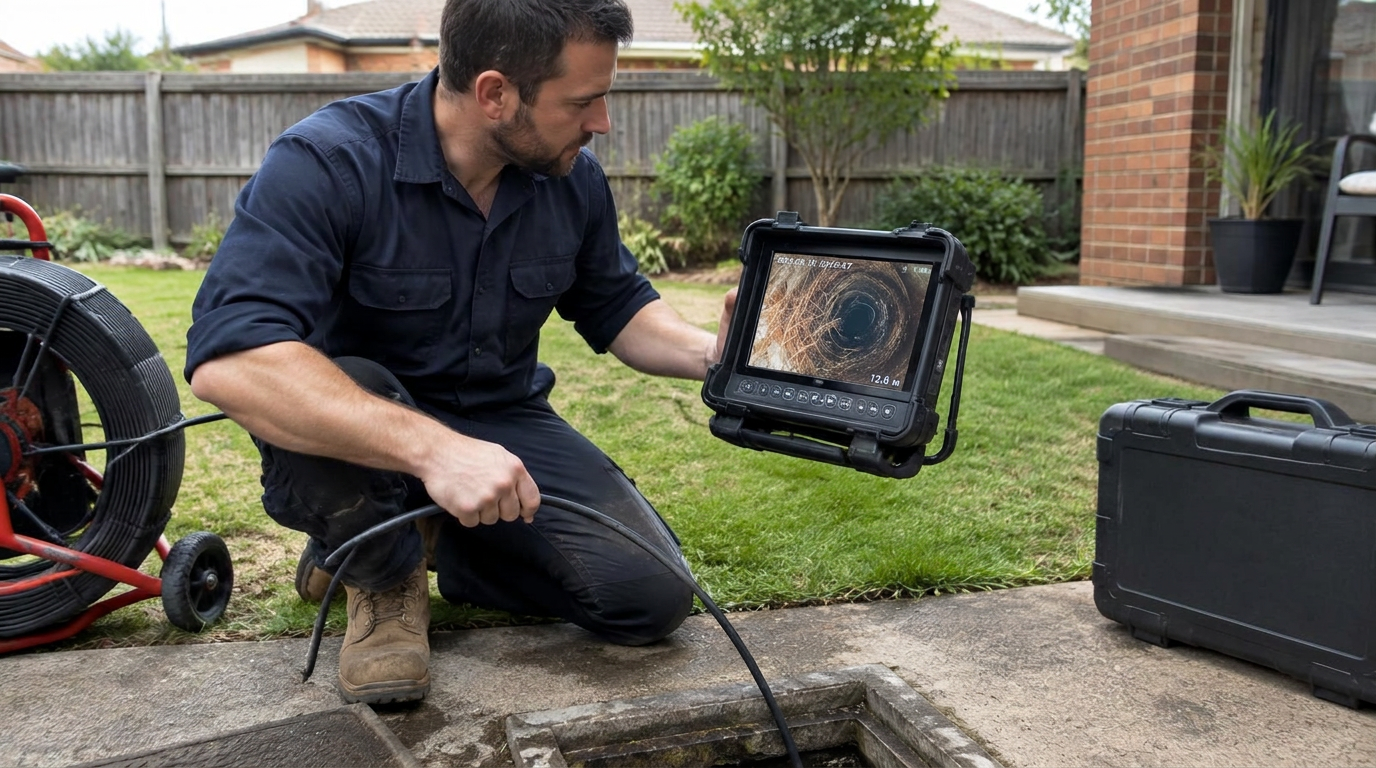
A CCTV drain inspection uses a small, waterproof camera mounted on a flexible rod that's fed into your pipe system through an existing access point — usually a drain grate, inspection shaft, or cleanout. The camera transmits live colour footage to a monitor above ground, along with a depth and distance reading so we can pinpoint the exact location of any issue.
The whole process takes between 45 minutes and 2 hours for most residential properties, causes zero disruption to your home, and in the vast majority of cases requires no digging whatsoever. After the inspection, you receive a full written report with photos and video footage of everything the camera found.
📍 Exact Location Every Time
One of the biggest advantages of CCTV drain inspection is precision. We don't just find a problem — we record its exact depth and distance from the access point. This means any repair work is targeted to the right spot, not a wide search area.
What a CCTV Drain Inspection Actually Shows
Here's what we typically find — and what it means for your property:
1. Tree Root Infiltration
Tree roots are the most common finding in Melbourne drain inspections, particularly in established suburbs like Doncaster, Heidelberg, Ivanhoe, Eltham, and Thomastown where large trees are common. Roots seek out moisture and infiltrate pipe joints or cracks, growing inside the pipe until they restrict or completely block flow.
The camera shows the exact location and extent of root intrusion — from a few hair-like roots just entering a joint, all the way to a pipe that's completely choked. This information determines whether hydro-jetting root cutting will clear the problem, or whether the pipe needs repair or replacement.
2. Cracked, Broken, or Collapsed Pipes
Older clay and concrete pipes used in Melbourne homes built before the 1980s are prone to cracking with age, ground movement, and root damage. The camera clearly shows cracks, fractures, and partial or full pipe collapses — along with their exact location. A cracked pipe that's caught early can often be relined without excavation. A fully collapsed section may require targeted dig and repair.
3. Offset or Displaced Joints
Ground settlement, tree root pressure, or poor original installation can cause pipe joints to shift or separate. Offset joints create a ledge inside the pipe where debris accumulates, causing repeated blockages. They also allow groundwater to infiltrate the sewer system. The camera identifies offset joints precisely so they can be repaired with minimal excavation.
4. Grease, Fat, and Scale Buildup
In kitchen drains — particularly in properties where cooking oil and fat have been poured down the sink over many years — the camera shows a progressive narrowing of the pipe bore caused by grease buildup. This is very common in older Melbourne homes and in properties that have housed multiple tenants over the years. Knowing the extent of the buildup allows us to apply hydro-jetting precisely where it's needed.
5. Construction Debris in New Builds
This one surprises many homeowners in newer Melbourne estates like Craigieburn, Mickleham, and Epping — but it's actually very common. Construction debris including concrete, silt, mortar, and building waste is regularly left inside drainage systems during the building process. A CCTV inspection before or shortly after settlement gives buyers documented evidence of what's actually inside their pipes.
6. Pipe Condition in Older Properties
For homes built before 2000 — particularly in suburbs like Essendon, Pascoe Vale, Glenroy, and Bundoora — a CCTV inspection provides a baseline assessment of overall pipe condition. Even if there's no immediate blockage, the camera can identify pipes that are nearing the end of their serviceable life, allowing you to plan maintenance proactively rather than dealing with an emergency later.
🏠 Buying or Selling a Property in Melbourne?
A pre-purchase CCTV drain inspection is one of the most valuable due diligence steps a Melbourne homebuyer can take. Drainage repairs can run into thousands of dollars — an inspection before settlement gives you the facts before you're legally committed.
What Happens After the Inspection?
Once the camera inspection is complete, you receive a written report with:
If the inspection finds nothing — which does happen — you get the peace of mind of knowing your drainage system is in good condition. If it finds something, you have the information to make an informed decision about what to do next, with no pressure.
When Should You Get a CCTV Drain Inspection in Melbourne?
You don't need to wait for a serious problem before booking. A CCTV inspection makes sense when:
Book a CCTV Drain Inspection Across Melbourne
Momentum Plumbing provides CCTV drain inspections across Craigieburn, Epping, Mickleham, Doncaster, Heidelberg, Eltham, Ivanhoe, Thomastown, Bundoora, Essendon, Pascoe Vale, Glenroy, and surrounding Melbourne suburbs. Every inspection includes a full written report with photos and video — and an upfront, fixed-price quote for any recommended work.
Same-day and next-day appointments available. Call 0400 362 044 or book online today.